Interior Design Branding: 5 Ways to Build a Brand That Reflects Your Work
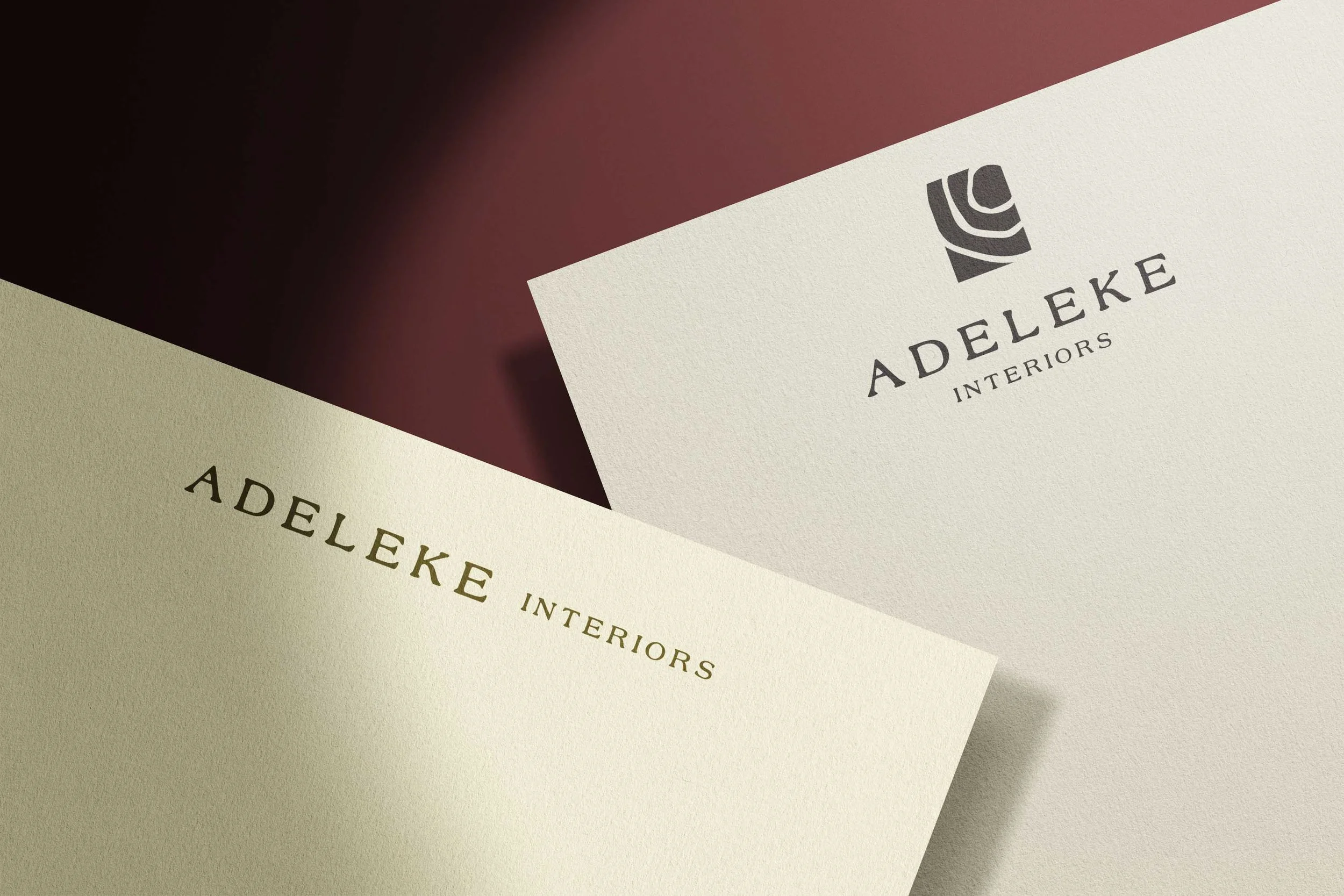
Your work tells a story. It might be a home layered with collected pieces, a contemporary space defined by clean lines, or a welcoming interior designed around the way a family lives. Every project reflects your perspective as a designer, from the materials you select to the way you balance beauty and function.
But does your brand tell that same story?

For interior designers, a beautiful portfolio is only one part of building a recognizable business. Potential clients also experience your studio through your website, logo, typography, photography, social media, proposals, and the way you communicate your services. Each of these interactions contributes to how people perceive your work and what they expect from the experience of working with you.
When these elements feel disconnected, it can be difficult for prospective clients to understand what makes your studio different. Your portfolio might communicate a refined, thoughtful approach, while your website or marketing materials tell an entirely different story.
Thoughtful interior design branding brings those pieces together. It helps communicate your studio's personality, clarify your positioning, and create a consistent experience from the first website visit to the final project presentation.
Whether you're establishing a new practice or refining an established studio, building a cohesive brand begins with understanding what makes your business distinct. Here are five areas to consider.
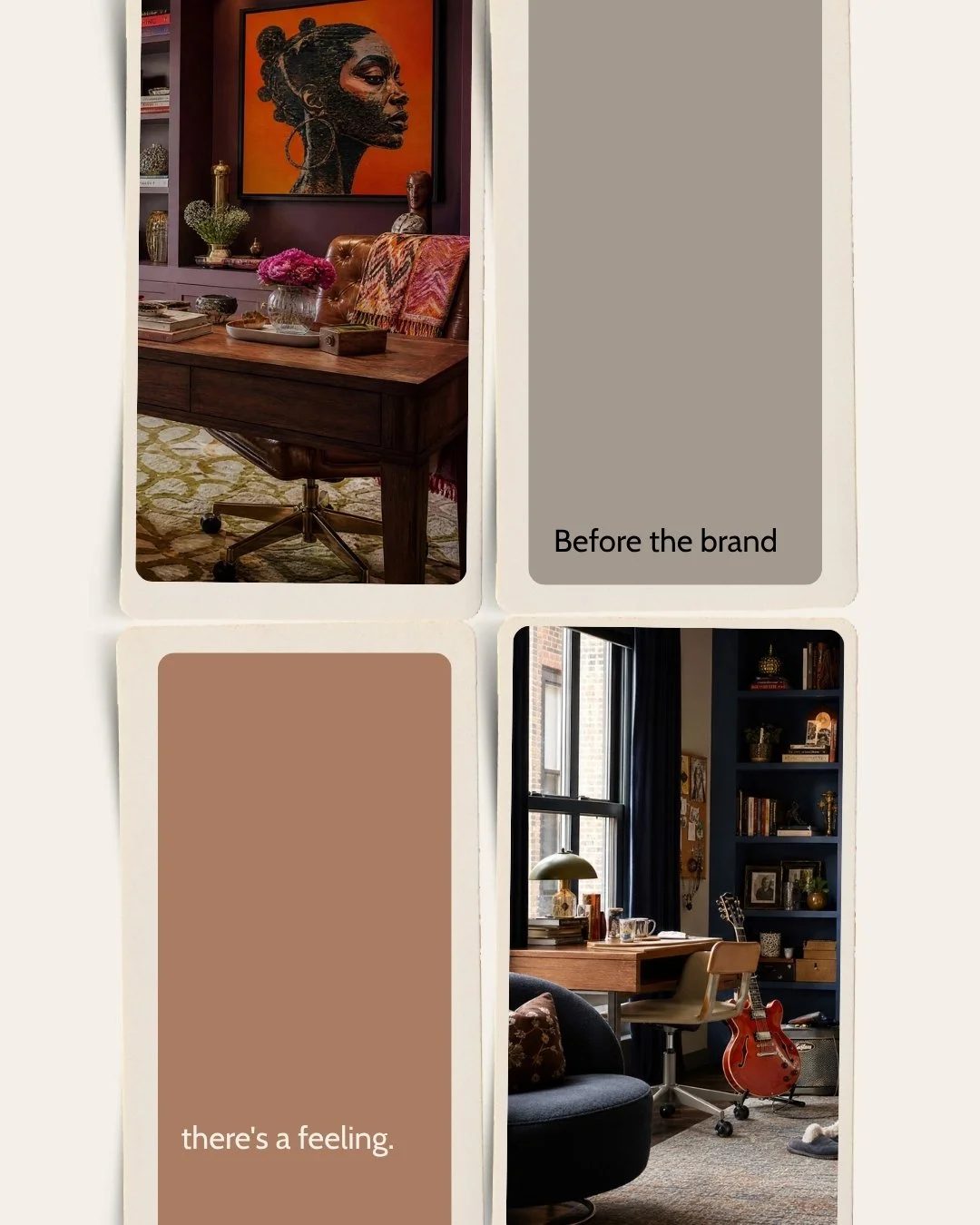
1. How do you define what makes your interior design studio different?
Before choosing colors, searching for typefaces, or designing a logo, take a step back and consider what your studio stands for.
It's easy to begin with visual inspiration, particularly in an industry where beautiful imagery is everywhere. But collecting references without a clear direction can lead to a brand that looks attractive yet feels similar to many others.
Start by examining your own work and the experience you provide.
What kinds of projects do you enjoy most? What do clients consistently appreciate about working with you? Do you approach interiors through architecture, materiality, storytelling, functionality, or a combination of these? What qualities do you want clients to associate with your studio?
Your answers can help establish three important foundations.
Your design perspective. This is the point of view that influences your decisions. Perhaps you favor layered, collected interiors that feel personal rather than overly styled. Maybe you prefer a more architectural approach, with considered proportions, natural materials, and a restrained palette.
Your ideal client. Consider the people whose priorities align with your services. Some clients value a highly collaborative process, while others appreciate a designer who provides structure and direction throughout a complicated renovation. Understanding these differences can help you communicate more clearly.
Your value. Think about what clients gain from working with you beyond the finished photographs. You might help them navigate decisions, coordinate a complicated project, make the most of an existing home, or create a cohesive result from many individual choices.
For example, two studios might produce equally beautiful contemporary interiors. One may emphasize a highly personalized, collaborative experience, while the other focuses on architectural clarity and carefully considered materials. Their work may share visual similarities, but their brands should communicate their different approaches.
The goal isn't to invent a personality for your business. It's to identify the qualities that are already present and express them consistently.
2. What should your visual identity communicate?
Once your positioning is clear, your visual identity can begin to express it.
Your logo, typography, colors, and supporting graphics should feel like natural extensions of your studio's design philosophy. They don't need to imitate your interiors, but they should share a similar sense of intention.
A studio known for understated, timeless spaces might explore a restrained palette, elegant typography, and generous spacing. A more expressive practice might use distinctive lettering, unexpected color combinations, or stronger graphic contrasts.
Neither direction is automatically better. What matters is whether the identity supports the impression you want to create.
A considered interior design brand identity also needs to function as a system. Your logo might look beautiful on its own, but what happens when it appears alongside project photography, on a proposal cover, or within a website header?
Consider how the elements relate to one another. Does the typography complement the logo? Do the colors work with the imagery? Does the overall presentation feel appropriate for the projects and clients you want to attract?
It's also worth thinking about flexibility. Your primary logo might be used on your website, while a simplified version works better on a social media profile or small printed application. A defined color palette and type system can keep these variations cohesive.
A useful exercise is to gather examples of your existing materials in one place. Include your website, business cards, proposals, social media graphics, and presentations. Look at them together rather than individually.
You may notice that some elements already work well, while others feel inconsistent or belong to an earlier stage of your business.
This gives you a more practical starting point than redesigning everything immediately.
3. How can your website reinforce your brand?
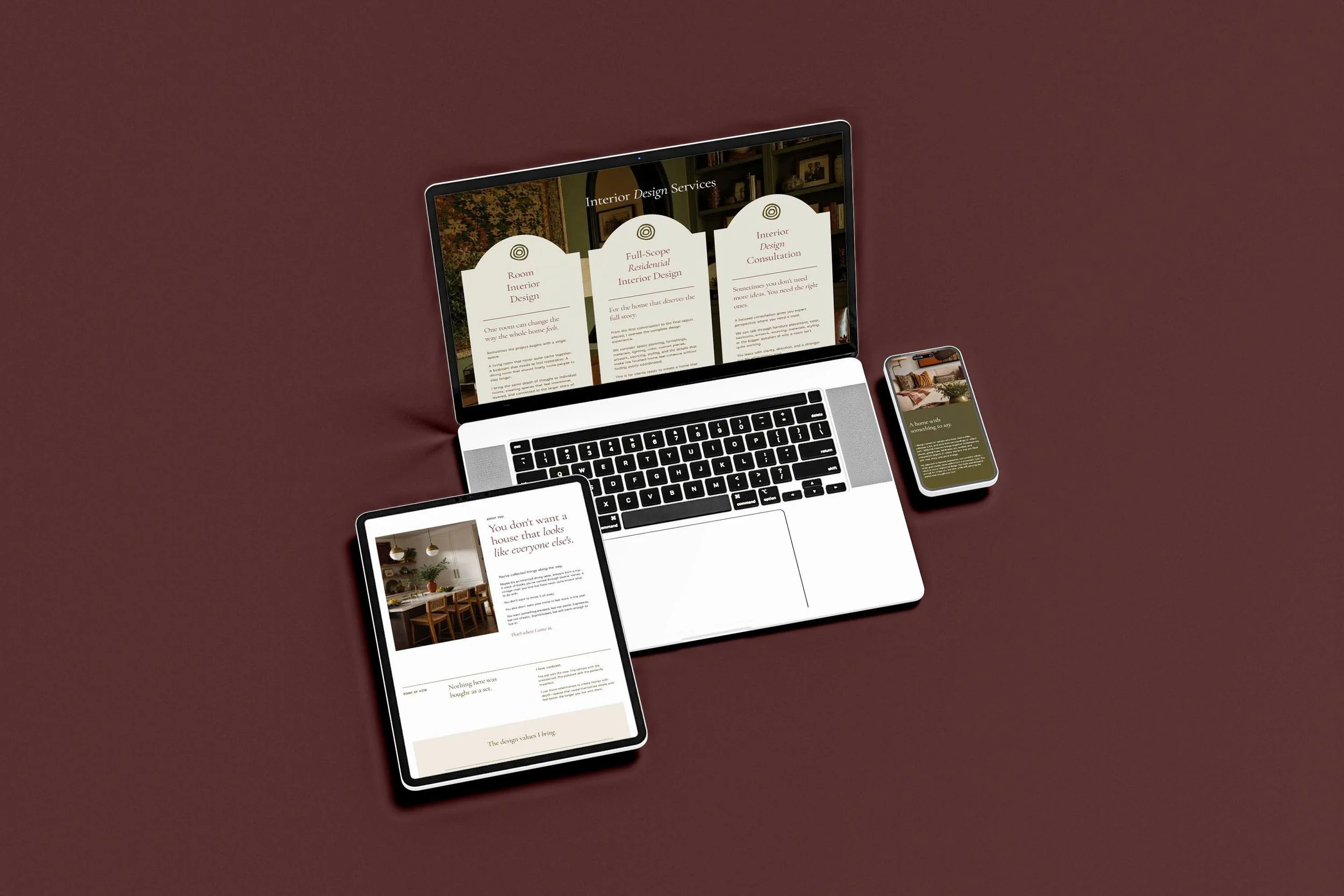
Your website is often where prospective clients begin to understand the full experience of working with your studio.
A cohesive brand should carry through every part of that experience, from the first impression on your homepage to the details of your services page.
Start with your photography. Choose images that communicate your design perspective rather than simply showing every project you've completed. A carefully curated portfolio can give visitors a clearer understanding of your work than a large collection without a consistent point of view.
Next, consider your messaging.
Your homepage should help visitors understand who you are, what you do, and the kind of clients you serve. Your about page can provide more context about your philosophy and experience. Your services page should explain what you offer and what clients can expect from the process.
Avoid relying entirely on broad statements such as "We create beautiful spaces." While appealing, this phrase doesn't tell prospective clients much about your approach.
Instead, communicate something more specific. You might describe your commitment to thoughtful space planning, your approach to material selection, or your ability to bring together different ideas into a cohesive home.
The visual and written elements should support one another. If your photography communicates warmth and individuality, your messaging shouldn't feel cold or overly technical without a clear reason. If your work is architectural and restrained, your website can reflect that through its typography, spacing, and presentation.
Your website also needs to be easy to use. Clear navigation, readable text, thoughtfully organized projects, and accessible contact information help visitors explore without unnecessary friction.
A well-branded website doesn't simply display your work. It helps people understand the thinking behind it and decide whether your studio might be the right fit.
4. How do you maintain brand consistency without making everything look identical?
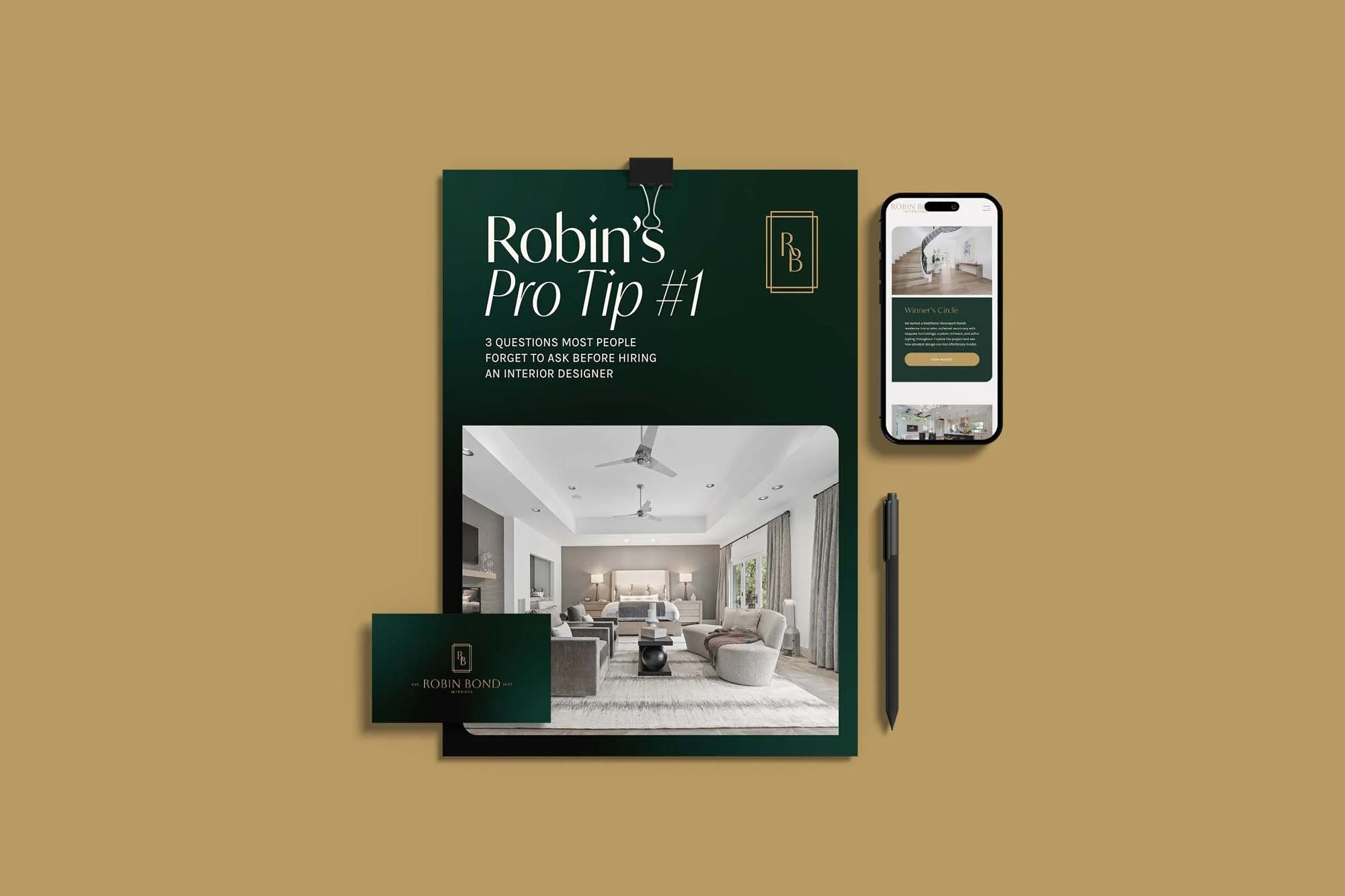
Consistency doesn't mean using the same layout, image treatment, or color combination everywhere.
Your website, social media, proposals, and project presentations serve different purposes. Each format needs enough flexibility to communicate effectively.
Instead, consistency comes from establishing a recognizable visual and verbal language that can adapt to different situations.
Your social media graphics might be more flexible than your website. A project presentation may rely heavily on photography, while a proposal needs to prioritize clarity and practical information. A printed brochure may require a different layout from an email newsletter.
These materials can look different while still belonging to the same studio.
Start by documenting the essentials of your brand. This might include logo variations, color values, typography, image direction, graphic elements, and writing style. You can also include examples of how these elements should be used across different applications.
The purpose isn't to create a complicated rulebook. It's to make decisions easier and help everyone working on your brand maintain a consistent direction.
Photography deserves particular attention. Even when your graphic design is consistent, a mixture of unrelated image styles can make your brand feel disconnected. Consider how lighting, composition, color, and editing affect the overall presentation of your portfolio.
Your written communication matters, too. A consistent voice helps your website, proposals, captions, and emails feel connected. Whether your tone is warm and conversational or polished and editorial, it should reflect the experience clients can expect from your studio.
When your brand has a clear foundation, consistency becomes less about repeating the same design and more about making decisions that support the same overall impression.
5. When is it time to revisit your branding?
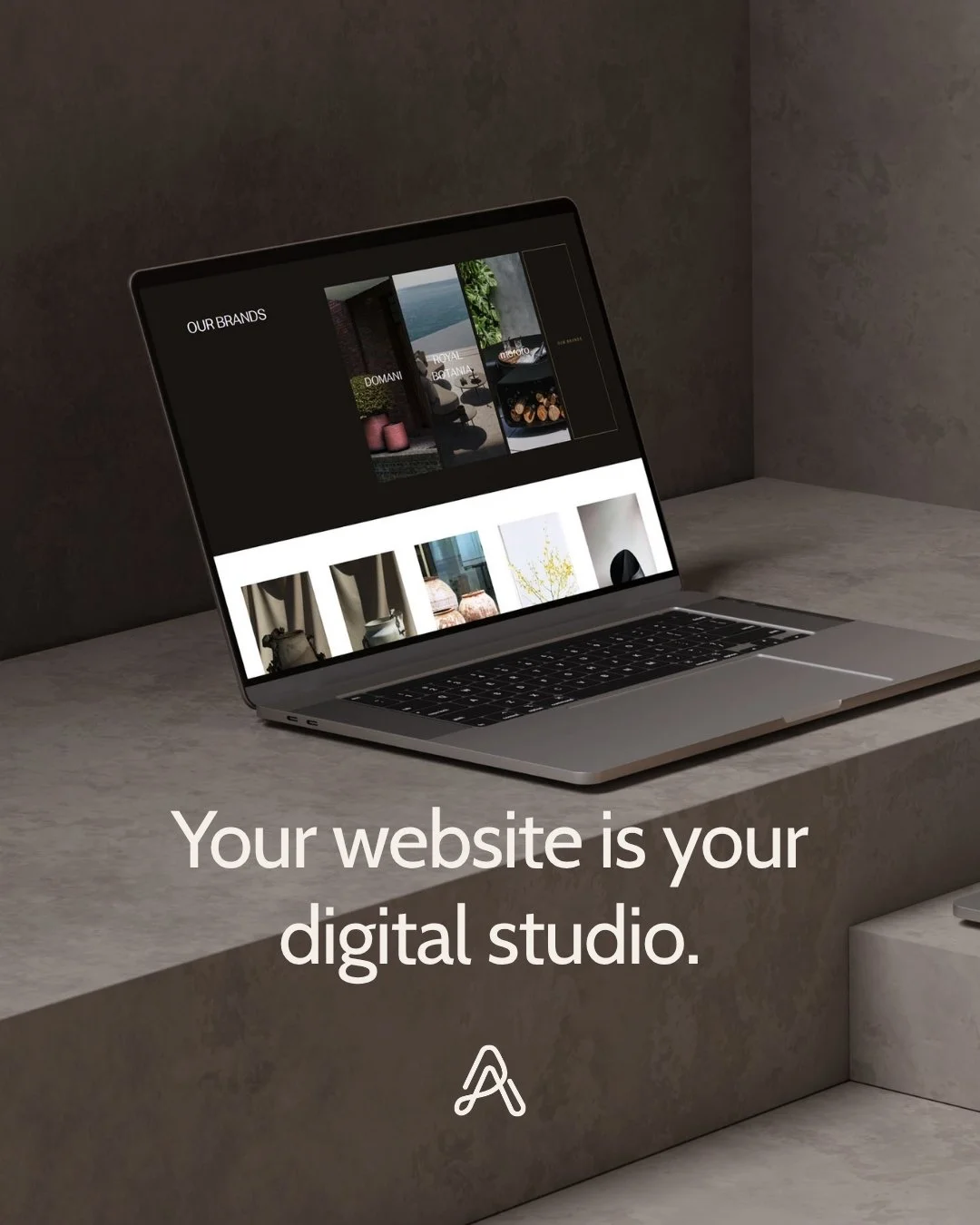
Your brand should evolve as your business evolves.
Perhaps your portfolio has become more sophisticated, your services have expanded, or you're moving toward a different type of project. Your current identity may no longer communicate the direction of your work.
Sometimes the problem is immediately visible. Your website may look dated, your logo may be difficult to use, or your marketing materials may feel inconsistent.
Other times, the issue is less obvious. You may struggle to explain your services clearly, or prospective clients may misunderstand the type of work you specialize in.
These are useful signals to investigate.
Ask yourself whether your current brand reflects the projects you want to attract. Does your website communicate your value? Are your visual materials consistent? Does your messaging help visitors understand what makes your studio different?
A refresh doesn't always require starting over. You might need clearer positioning, updated photography, a more flexible visual system, or improved website content rather than an entirely new identity.
Begin by identifying what no longer works and why. Then prioritize the changes that will make the biggest difference to the way your business is presented.
It's also helpful to look at your brand from the perspective of someone who has never worked with you. Your existing clients may already understand your approach, but a new visitor needs enough context to form an accurate impression.
The best time to revisit your branding is when there is a meaningful gap between the quality of your work, the direction of your business, and the way your studio presents itself.
Bringing Your Interior Design Brand Together
Strong interior design branding begins with understanding what makes your studio distinct. From there, your visual identity, website, messaging, and marketing materials can work together to communicate that perspective consistently.
The most effective brands aren't necessarily the loudest or most elaborate. They're the ones that make it easier for people to understand the business behind the work.
When your interior design brand identity reflects your design philosophy and the experience you provide, your portfolio becomes part of a larger story. Your website introduces that story, your marketing reinforces it, and your client communications continue it throughout the relationship.
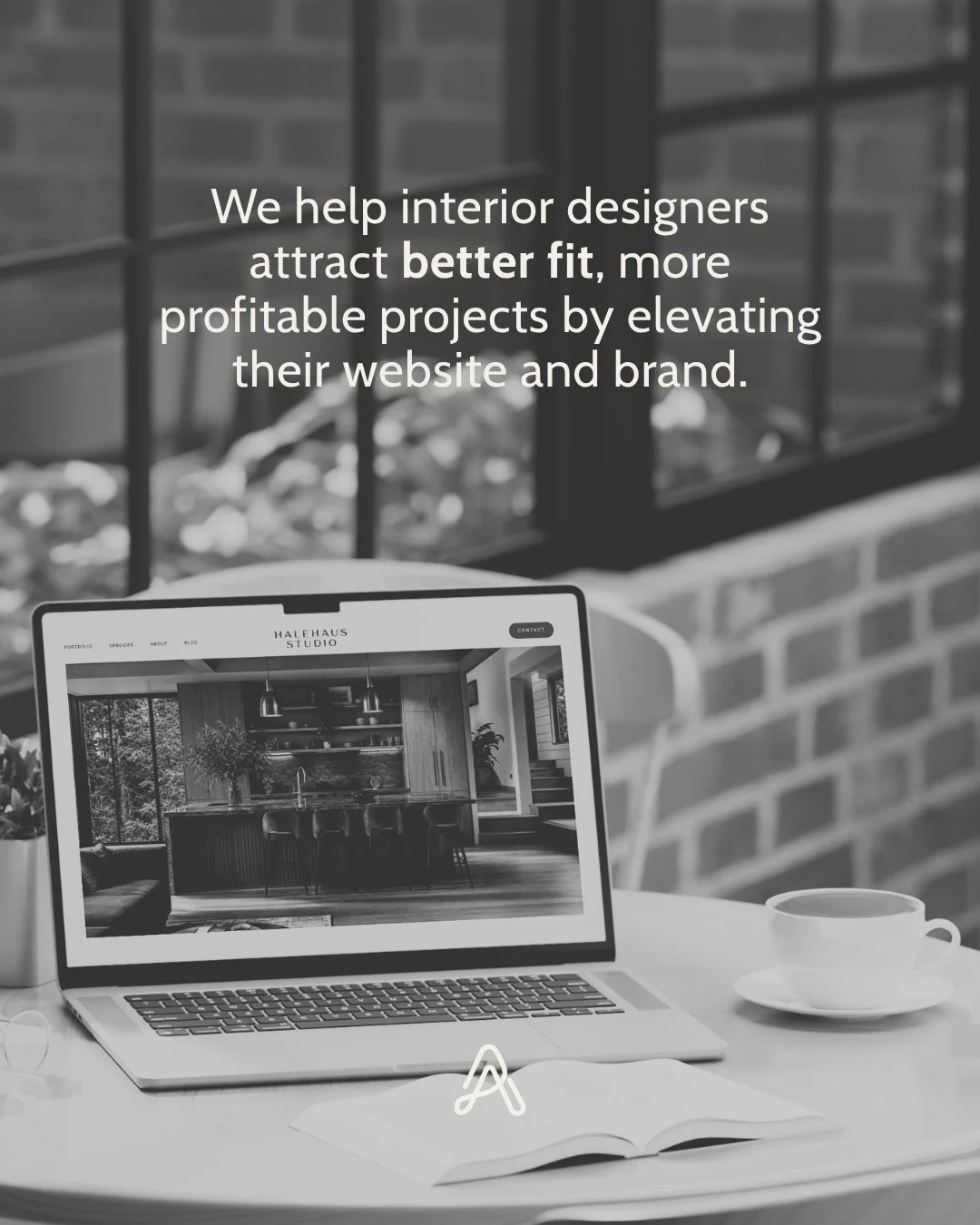
You don't need to change everything at once. Begin by looking at the way your studio is presented today, identify the areas that feel disconnected, and make intentional improvements that support where you want your business to go.
Because your brand should do more than look beautiful. It should help the right people understand your work, recognize your value, and feel confident taking the next step.
If your current brand no longer reflects where your studio is headed, it may be time to reconsider how everything fits together.
Explore The Art of You's branding services to learn how thoughtful visual identity and digital design can help bring your studio's story to life.